

Bespoke Polythene Liners: How to Specify Dolav and Octabin Liners

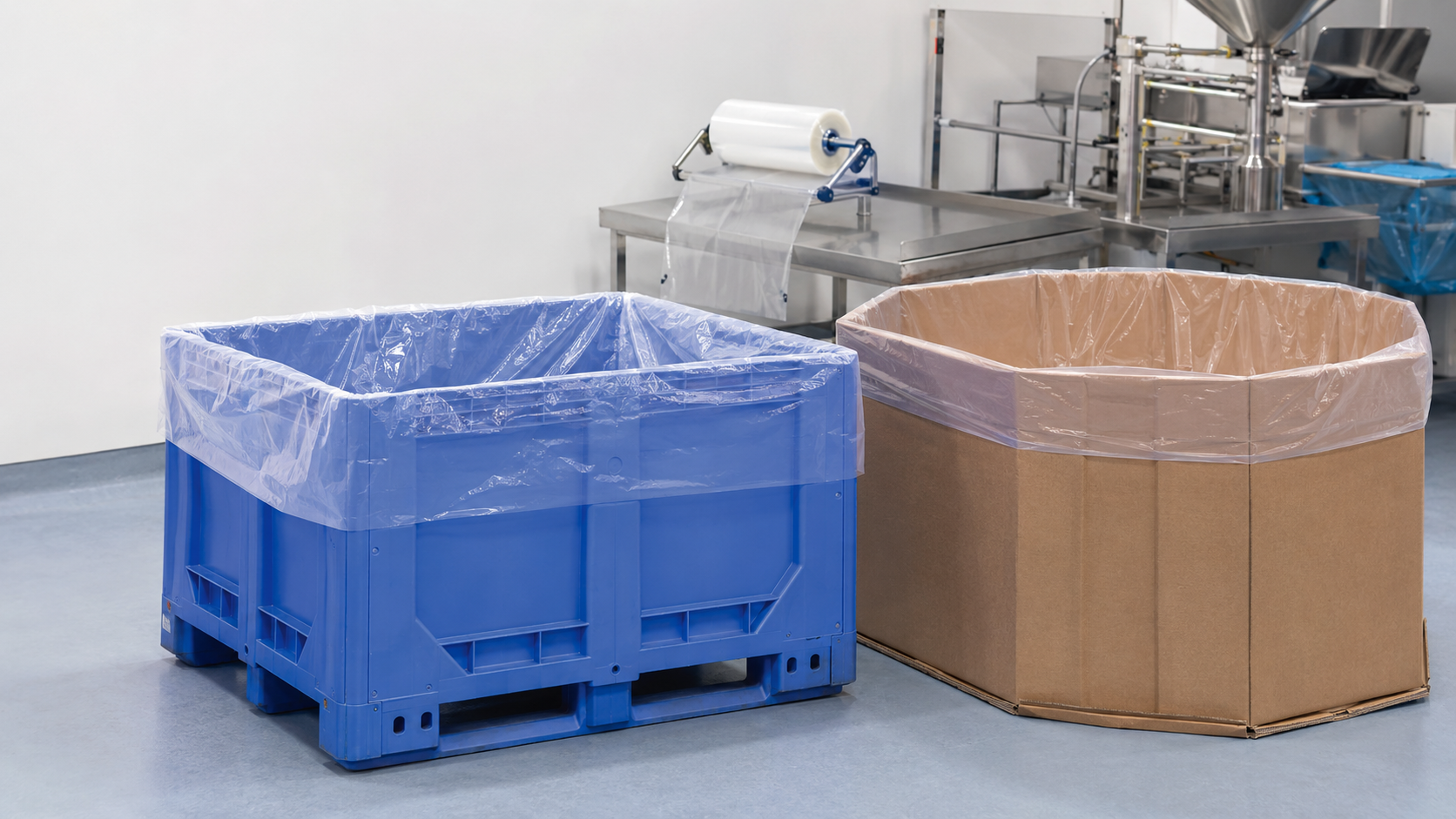
A bulk-container liner can look like a simple polythene bag, but small specification differences determine whether it fits cleanly, stays in position and protects the product during filling, storage and discharge. Ordering by width and length alone often leaves important details unresolved.
This practical guide explains how to specify bespoke polythene liners for Dolavs, Octabins, pallet boxes, tote bins, drums and other bulk containers across food processing, manufacturing, recycling and contract-packing operations.
What are bespoke polythene liners used for?
Bespoke polythene liners create a clean barrier between a product and its reusable or corrugated outer container. Depending on the material and compliance required, common applications include:
Dry food ingredients, bakery products, produce and processed foods
Powders, granules, pellets and other free-flowing materials
Engineering components, textiles and manufactured parts
Contract-packing and temporary work-in-progress storage
Recycling, waste segregation and recovery operations
The correct design depends on what is being packed, how the container is filled and how the contents will be removed—not simply the nominal capacity of the bin.
1. Start with the container, not an assumed bag size
Two containers described as a “Dolav”, pallet box or Octabin may have different internal dimensions, wall profiles and corner details. The most useful starting information is the container manufacturer and model, internal length, width and depth, and the dimensions around the rim.
A photograph, technical drawing or physical sample can prevent avoidable sizing errors. It also shows whether the liner must accommodate moulded corners, hinged sides, discharge points or other internal features.
2. Choose the right liner construction
The construction should match the container and packing method. Options may include:
Open-top gusseted liners for rectangular pallet boxes and Dolav-style containers
Formed or box-shaped liners for improved corner fit and more even material distribution
Octabin liners designed around the internal footprint and usable height of the bulk container
Bottom-weld liners or sacks for straightforward containment and closure
Perforated liners on a roll where speed, hygiene and storage efficiency are priorities
A highly tailored fit can improve presentation and handling, while a more flexible liner may suit several container sizes. The best choice depends on whether consistency, versatility or speed matters most.
3. Define width, length, usable depth and overhang
A liner must reach the bottom of the container without being pulled tight, while leaving enough material at the top for folding over the rim, tying, heat sealing or closing after filling. Too little material can load the seams and cause the liner to pull away from the corners. Too much material can obstruct filling equipment or create unnecessary handling.
When requesting a quotation, distinguish between the container dimensions, the required liner dimensions and the usable filled depth. Also explain how much top overhang is needed and what happens to the liner after filling.
4. Select film thickness for the real handling conditions
Thicker film is not automatically the best specification. The aim is to provide sufficient puncture, tear and handling performance without adding avoidable material or cost. Thickness should be considered alongside:
Product weight and bulk density
Sharp edges, abrasive particles or irregular components
Manual handling, forklift movement and internal transfer points
Filling height and the way material enters the container
Storage temperature and duration
Whether the liner is lifted, tipped, pumped or emptied by suction
A sample or controlled trial is particularly useful when replacing an established liner, reducing gauge or packing a difficult product.
5. Specify material, food contact and recycled-content requirements
Natural LDPE is commonly selected where flexibility, toughness and reliable sealing are required. Coloured, tinted and recycled-content options may also be suitable, depending on the application.
If the liner will touch food directly, state this at the enquiry stage and describe the food type, contact conditions and intended use. UK Food Standards Agency guidance says food packaging must be suitable for food use and that businesses using plastic packaging need written evidence of compliance. See the FSA packaging and labelling guidance for current requirements.
For non-food or suitable indirect-contact applications, recycled material may help reduce virgin polymer use. HMRC states that plastic packaging components containing 30% or more recycled plastic are not chargeable for Plastic Packaging Tax, although they still count towards the registration threshold and records are required. Recycled plastic should only be used where other regulations and food-safety standards allow it. See the current GOV.UK Plastic Packaging Tax guidance.
6. Explain how the liner is filled, closed and discharged
Process information is as important as dimensions. Tell the supplier whether filling is manual or automated, whether material enters hot or cold, and whether the liner is held open by a frame, vacuum or operator.
Also explain whether the top is folded, twisted, tied, clipped or heat sealed, and how the product is discharged. If powders, static-sensitive materials or a potentially explosive atmosphere are involved, flag this early. Specialist antistatic or static-dissipative requirements need to be considered as part of the complete application and safety assessment, not treated as a generic film option.
7. Decide how liners should be packed and presented
Liners can be supplied loose, folded, bundled or perforated on rolls. The best presentation depends on line speed, hygiene controls, operator access and available storage. For larger call-off programmes, pallet quantities, carton labels, batch traceability and scheduled deliveries should be agreed with the film specification.
Common liner problems—and what they can indicate
Liner pulls out of the corners: insufficient usable depth, incorrect gusset or excessive tension during fitting
Film tears during filling: puncture risk, sharp product edges, unsuitable thickness or poor material distribution
Liner slips into the container: inadequate overhang or no suitable method of holding it around the rim
Product bridges or will not discharge cleanly: fit, film surface, static behaviour or discharge method needs review
Closure is inconsistent: top length or liner presentation does not match the operator or sealing process
Approval is delayed: food-contact, recycled-content or traceability requirements were not defined at the start
What information should you send with an enquiry?
A useful liner enquiry normally includes:
Container manufacturer, model or a clear photograph
Internal container length, width and depth
Product description, weight and bulk density
Required liner construction and current dimensions, if known
Preferred thickness or an existing sample
Direct food-contact or other compliance requirements
Virgin, recycled-content, coloured or tinted material preference
Filling, closure and discharge method
Packing format, labels and traceability needs
Order quantity, annual usage and delivery location
If the existing specification is unknown, a used liner, unused sample, drawing or photograph is often enough to establish a sensible starting point.
How Stretchband Packaging can help
Stretchband Packaging supplies bespoke polythene liners for Dolavs, Octabins, pallet boxes and tote bins, with material, size, thickness and packing formats selected around the application. We can also advise on POR bags and bottom-weld sacks and recycled and PCR polythene options where these are appropriate.
You do not need a finished technical drawing to start a conversation. Send the container details, a sample or photographs and a description of the process, and our team can help identify a practical trial specification. Contact Stretchband Packaging for technical advice, samples or a quotation.

