PCR Polythene Film: 7 Questions Before Changing Your Packaging Specification


PCR polythene film can reduce the use of virgin polymer and help businesses respond to packaging-tax and sustainability targets. However, changing from a virgin film to a recycled-content structure is not simply a matter of adding a percentage to an existing specification.
The right PCR level depends on what the film has to do. A liner protecting an industrial component may have very different requirements from film running at speed through an automated bagging line. Appearance, sealing, puncture resistance, print, product contact and reel consistency can all affect the decision.
Before approving a change, ask these seven questions.
1. What does the film need to protect?
Start with the application rather than the recycled-content percentage.
Record what the pack must withstand during filling, sealing, handling, storage and transport. Relevant demands may include:
sharp or irregular product edges;
heavy or dense contents;
repeated handling between sites;
moisture, dust or contamination protection;
outdoor or cold-store exposure;
stacking pressure; and
a defined shelf or storage period.
PCR polythene film can suit many industrial bags, sacks, liners, covers and secondary packaging applications. But the structure still needs enough tear, puncture and seal performance for the job. If the current film is already close to its operating limit, copying its nominal thickness without testing the new blend may create avoidable failures.
2. Is the packaging manual or machine-run?
Manually fitted liners and sacks often give more room to assess a recycled-content option because operators can adapt to small changes in feel or appearance. Automated lines usually require a tighter review.
For machine-run film, consider:
unwind behaviour and reel presentation;
film stiffness and stretch;
coefficient of friction and web tracking;
opening or folding performance;
registration where the film is printed;
sealing temperature, dwell time and pressure; and
performance during starts, stops and acceleration.
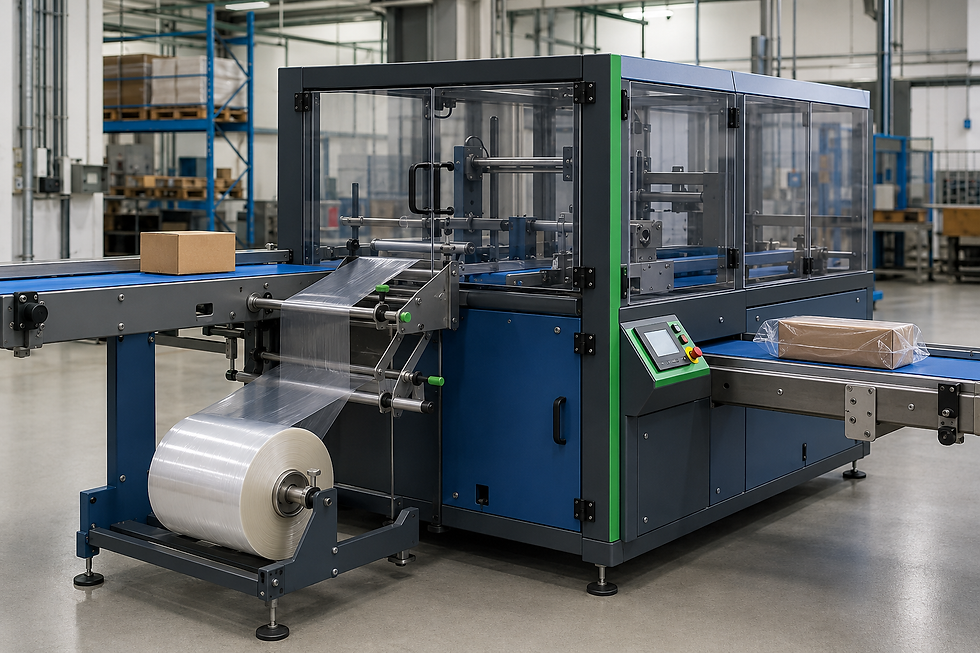
A film can look acceptable as a hand sample but behave differently at production speed. The trial should therefore use the real product, machine, settings and normal line speed wherever possible. Our single-wound sheeting page explains the main machine-run format.
3. How important are clarity, colour and surface finish?
PCR film may have more variation in tint, clarity or surface appearance than a high-clarity virgin film. That does not necessarily affect its fitness for purpose, but it can matter when the pack is customer-facing, colour-critical or used for product inspection.
For a hidden transit liner, a light grey or variable tint may be perfectly acceptable. For retail presentation, barcode scanning or a process where operators need to see the product clearly, appearance should be included in the approval criteria.
Agree the acceptable standard before production. A physical approved sample is often more useful than relying on words such as “clear” or “natural”, which can be interpreted differently.
4. Does the film need to seal, print or convert in a particular way?
The complete film construction affects how it performs after extrusion. A PCR-containing blend may need to be adjusted for the converting process rather than treated as a direct resin substitution.
For heat-sealed bags or automated wrapping film, define the required seal window and test seal strength after the pack has cooled. For printed film, confirm treatment level, ink system, print orientation and any restrictions on where the seal crosses the printed area.
If the material will be perforated, wicketed, gusseted, bottom-welded or converted into another format, include that process in the trial. The finished component—not just the parent reel—must meet the requirement.
5. Is the application subject to product-contact or hygiene requirements?
Do not assume that a recycled-content film is suitable for every product-contact application. Where food contact or another controlled use is involved, the exact material structure and supporting documentation must be reviewed against the relevant requirements.
HMRC guidance also states that recycled plastic should only be used where permitted under other regulations and food-safety standards. This means a tax or sustainability target should not override the safety and compliance needs of the application.
For many customers, the easiest starting points are non-food-contact industrial packaging, secondary packaging, transit protection, waste sacks, pallet covers and liners where the film does not directly contact a sensitive product.
6. What recycled-content evidence is required?
Define whether the target refers specifically to post-consumer recycled content, another recycled source, or total recycled content. Then agree what evidence needs to accompany the supply.
For UK Plastic Packaging Tax, plastic packaging components containing less than 30% recycled plastic may be taxable. The rate is £228.82 per tonne from 1 April 2026. Registration and liability depend on the business and the packaging supplied, so customers should use HMRC guidance or professional advice for their own position.
The packaging specification should clearly state the agreed recycled-content level and any documentation or traceability requirements. Keeping this information aligned between purchasing, technical, sustainability and the film supplier avoids a situation where a commercial target is agreed but cannot be evidenced in the required way.
7. How will the change be trialled and approved?
A controlled trial is the best way to compare a PCR film with the current specification.
Set the acceptance criteria before the trial. These may include:
minimum line speed and stable running time;
seal strength and pack integrity;
puncture and tear performance;
reel changes and start-up waste;
rejected packs by fault type;
appearance and print quality;
palletisation and downstream handling; and
customer or end-user acceptance.
Change one major variable at a time and retain samples from both the reference and trial films. If the PCR option needs a slightly different machine setting, record the approved operating window so the result can be repeated across future deliveries.
PCR content and recyclability are separate questions
Recycled content describes the source of material used to make the packaging. Recyclability considers whether the finished packaging can be collected, sorted and reprocessed through the relevant system. A pack can contain recycled material without automatically being widely recyclable, and a recyclable pack does not necessarily contain recycled content.
For packaging in scope of Extended Producer Responsibility reporting, liable large producers may also need to assess relevant household packaging using the government's Recyclability Assessment Methodology. Flexible and rigid plastics are treated as separate subtypes, so accurate information about the finished pack remains important.
Where can PCR polythene film be used?
Subject to the specification and trial outcome, recycled-content LDPE and LLDPE films can be considered for:
single-wound sheeting for automated wrapping and bagging;
lay-flat tubing for component and product protection;
pallet covers and top sheets;
collation and transit packaging; and
printed or coloured secondary packaging.
The best opportunity is not always the film with the highest possible PCR percentage. A stable, fit-for-purpose specification that reduces virgin polymer without increasing rejects, damage or total material use is often the more practical result.
Build the specification around the application
Stretchband Packaging supplies bespoke recycled and PCR polythene films in a range of formats, widths, gauges and reel presentations. We can review the current specification, identify suitable starting applications and arrange a controlled trial before any wider change is made.
If you are considering PCR film, send us the existing dimensions, thickness, application, packing method, annual usage and required recycled-content target. We will help determine what should be tested and which performance criteria need to remain fixed. You can also request a no-cost film audit or contact our team.