Single-Wound Polythene Sheeting: 7 Specification Decisions That Prevent Packing Problems


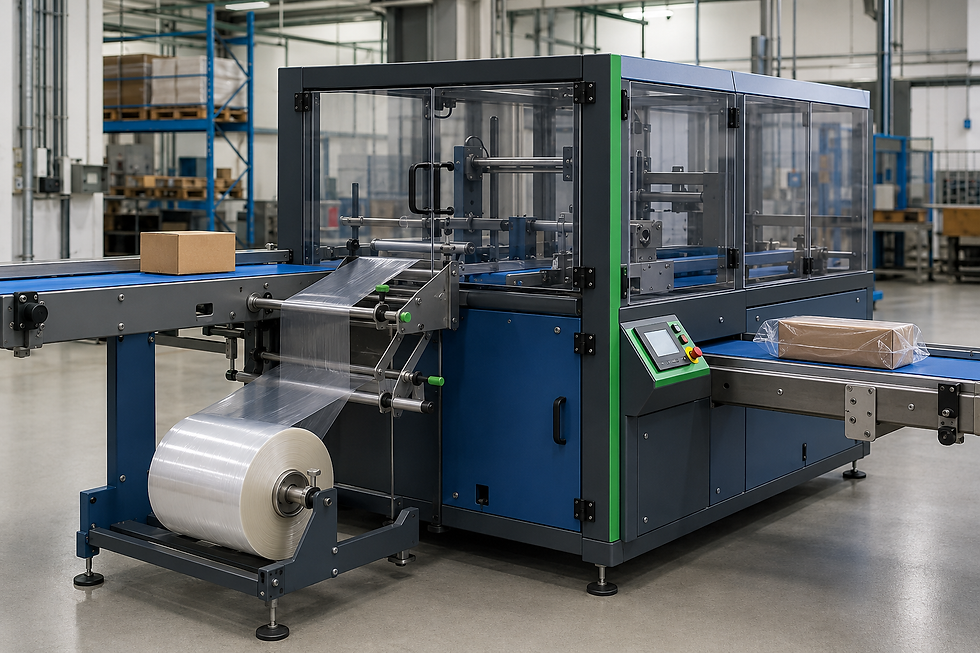
Single-wound polythene sheeting looks simple: one flat web of film wound onto a reel. In practice, small specification differences can decide whether it runs cleanly, seals consistently and protects the product—or creates wrinkles, stoppages and unnecessary material use.
Unlike lay-flat tubing, single-wound sheeting is not a sleeve. It is a single layer supplied on a reel for wrapping, covering, interleaving or feeding into converting and automated packing equipment. That makes it useful across food production, contract packing, engineering, furniture, building products and general manufacturing.
The right specification starts with the application and machine, not with gauge alone. These seven decisions give buyers, engineers and production teams a practical starting point.
1. Define what the film must do
Start with the finished pack. Is the film protecting a surface from dust and moisture, separating layers, wrapping a product, forming part of a heat-sealed pack or feeding another converting process?
List the stresses the film will face: sharp edges, product weight, handling, heat, cold, moisture and the time between packing and use. A short-lived interleaf and a heavy industrial overwrap may both use LDPE sheeting, but they should not automatically use the same formulation or thickness.
2. Set width from the product and the process
Nominal product width is only the beginning. Allow for the intended overlap, sealing area, registration or edge-trim requirement, plus any movement as the product enters the web.
On automated equipment, also check the usable web path: former, guides, rollers, sealing jaws and sensors. Film that is unnecessarily wide adds material to every pack; film that is too narrow may expose the product or produce an unreliable seal.
3. Choose gauge by performance, not habit
Buying the same micron year after year can feel safe, but gauge should follow the job. Puncture risk, load, unsupported spans, drop points and sealing conditions all matter.
A stronger formulation may allow a controlled reduction in thickness, but only a line trial can establish whether the change is genuinely economical. Compare cost per accepted pack, including rejects and downtime, rather than price per kilogram alone.
4. Match the film to sealing and machine conditions
Where the sheet is heat sealed, provide the machine type, jaw or wire arrangement, normal temperature window, dwell time and line speed. Film formulation, gauge variation and contamination in the seal area can all affect consistency.
Tracking matters too. A reel that telescopes, has uneven tension or presents inconsistent edges can pull the web off line. Accurate reel build and a stable coefficient of friction are often as important as nominal film strength.
5. Specify slip, cling, clarity and colour deliberately
Film surfaces interact with products, conveyors and machine parts. Too much slip may make stacks unstable; too little can cause drag or difficult opening. Cling can be helpful for protective wrapping but undesirable where sheets must separate cleanly.
Clarity helps with product inspection and barcode visibility. Tint, opacity or printed identification may be preferable where load recognition, light reduction or process control matters. Treat these as functional requirements rather than cosmetic extras.
6. Design the reel for operators and the line
Confirm reel width, maximum outside diameter, core diameter, core length, unwind direction and permitted reel weight. These details determine whether the reel fits the machine and can be handled safely with the available equipment.
Larger reels reduce change frequency, but only if the unwind stand, lifting method and storage arrangement can accommodate them. For high-volume lines, consistent reel presentation can be a straightforward way to reduce adjustment time between batches.
7. Review recycled content and compliance in context
Recycled-content film may be appropriate for many industrial covering, wrapping and separation applications. The achievable level depends on appearance, performance, product-contact requirements and the consistency needed by the process.
For packaging within the UK extended producer responsibility regime, the government’s Recyclability Assessment Methodology distinguishes flexible and rigid plastics and applies only to packaging in scope. Non-household packaging is exempt from the recyclability assessment itself, although wider packaging data duties may still apply. Confirm the status of the finished pack rather than assuming that every polythene sheet is treated identically.
A practical single-wound sheeting trial checklist
Before approving a new specification, record:
product dimensions, weight and sharp points
required film width, overlap and seal area
current gauge and material formulation
machine model, line speed and sealing conditions
slip, cling, clarity, colour and print requirements
core size, reel diameter, unwind direction and reel weight
accepted-pack rate, waste, changeover time and operator feedback
A controlled trial should use agreed pass/fail criteria and enough production time to expose start-up, steady-running and reel-change behaviour.
Specify the whole system, not just the film
Reliable single-wound polythene sheeting comes from matching the film, reel and packing process. Stretchband Packaging manufactures bespoke LDPE sheeting for automated packaging, protective wrapping, food, pharmaceutical and industrial applications across the UK and Ireland.
If you would like a second opinion, send us a sample, drawing or current reel label. We can review the specification and suggest a practical trial without pressure to change a film that is already doing its job.